Seating Solutions: Is the Honda CRV 7 Seater Worth It? A Practical Family Review
Here’s the thing about squeezing every last inch of utility out of a Honda — you either have a clever place for everything, or you’re digging through the back seat looking for your phone charger during a road trip, wishing you had just a little more room for the kids and the cooler.
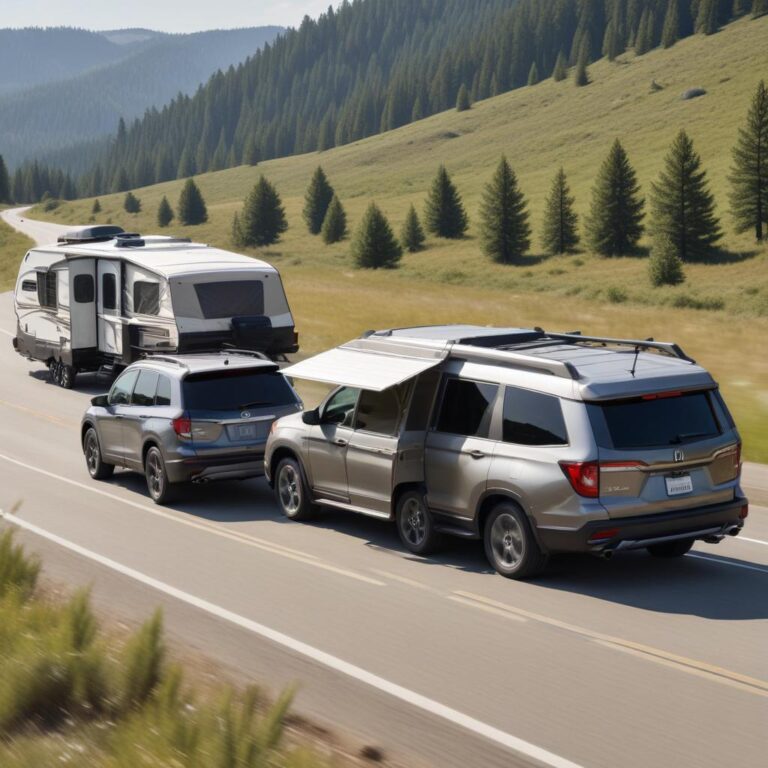
There’s a specific kind of satisfaction that comes from fitting a full-size stroller, a week’s worth of groceries, and a set of road trip bags into a Honda that just refuses to say “no” to cargo. For years, Honda owners have known this feeling, whether it’s folding the Magic Seats in an HR-V to haul a bicycle, packing sports gear into an Odyssey for a family tournament, or realizing your Civic hatchback has more cargo room than expected. But what happens when you need to haul people too? That’s where the debate around the Honda CR-V 7 seater comes in. Is it a genuine family hauler, or just a five-seater with two tiny chairs tucked in the back for emergencies?
TL;DR
The Honda CR-V 7 seater is the automotive equivalent of a Swiss Army knife—it’s incredibly useful in a pinch, but you wouldn’t use it for every job. It offers unbeatable value for families who need a third row for occasional use (think carpool duty or picking up the grandparents from the airport) but want the everyday efficiency and drivability of a midsize SUV. While the third row is snug and sacrifices some cargo space, the cabin is packed with smart storage, the second-row comfort is class-leading, and the 1.5-liter turbo engine keeps things peppy without breaking the bank at the pump.
Key Takeaways
- Occasional Use Only: The third row is best suited for children or smaller adults on short trips; it’s not a replacement for a minivan or a Pilot.
- Cargo Compromise: You lose significant trunk space when the third row is up (about 150L), but the floor adjusts to create a flat load surface when folded .
- Budget-Friendly: With significant market discounts in some regions, the 7-seater CR-V often costs only slightly more than a base 5-seater model, making it a smart financial choice for the “just in case” buyer .
- Feature-Rich: Even mid-tier trims come loaded with Honda Sensing®, Tri-Zone Climate Control, and a user-friendly infotainment system with Wireless Apple CarPlay® .
- Driving Dynamics: It drives smaller than it looks. The steering is light and responsive, and the turbo engine delivers torque low in the rev range, making city driving a breeze .
Understanding the Honda CR-V Interior Layout: More Than Just Two Extra Seats
When Honda decided to add a third row to the CR-V, they didn’t just bolt two seats into the trunk. They re-engineered the space. The wheelbase was stretched slightly, and the fuel tank was reshaped and thinned to free up precious inches for your feet . This “space efficiency” is why the Japanese reliability meets German-like interior logic.
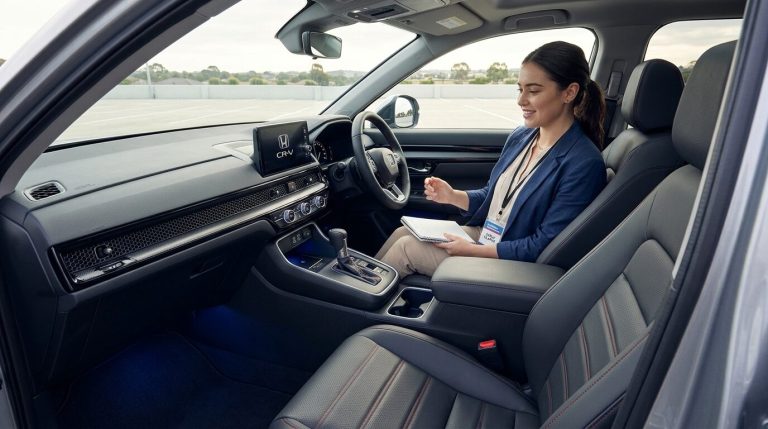
Sliding into the driver’s seat, you’re greeted by a cabin that feels airy and open. The straight dashboard lines give an impression of width, and the tall roofline prevents that claustrophobic feeling you get in some sportier SUVs . It might not be as flashy as some Korean or American rivals, but the smart interior design is immediately apparent. Everything you need is where you expect it to be—big knobs for climate control, a volume dial you can actually use with your eyes on the road, and a Center Console that acts like a black hole for clutter.
Living with the Center Console and Door Pockets: Honda’s Practical Storage
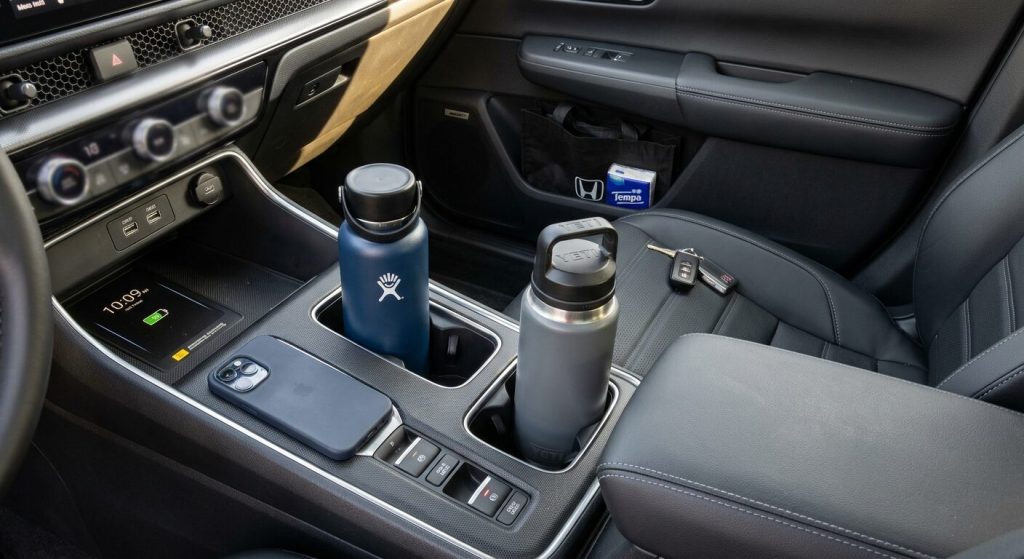
Here’s where Honda engineers deserve a raise. The door pockets are massive. We’re talking “fit a full-size tablet or a water bottle plus a stack of snacks” massive . In the front, the center console is a marvel of adaptability. It has a three-mode system that can transform from a deep bin (perfect for a small handbag) to a tray with dedicated phone slots. This is the kind of Honda cargo solution that makes daily life easier. No more digging for your garage door opener or listening to loose change rattle around.
Bold safety reminder: Always secure heavy items in the cargo area or rear storage compartments during a drive to prevent them from shifting and affecting passenger safety.
Technology Upgrades vs. Everyday Practicality: How Honda Interiors Have Evolved
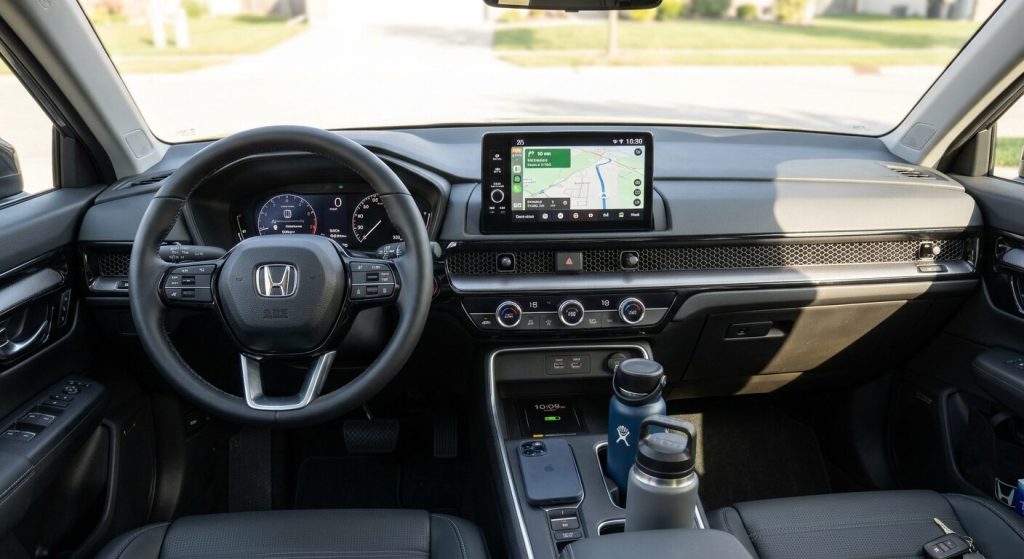
The tech inside the new CR-V strikes a rare balance. It’s modern without being intimidating. The HondaLink® Infotainment System (displayed on a crisp 9.0-inch screen) is simple to navigate, and the inclusion of Wireless Apple CarPlay® and Android Auto™ means you can ditch the cables . Unlike some competitors that bury every function in a touchscreen, Honda keeps the important stuff physical. You can adjust the temperature or change the radio station without diving into menus, which is a huge win for road trip comfort.
That said, if you’re coming from a fully digital Audi or Tesla, the partially digital instrument cluster might feel a bit basic. However, it’s incredibly easy to read, and the graphics are sharp. It’s a driver-focused Japanese cabin in the best sense—it gives you the info you need without the distraction.
The Evolution of Honda Interior Space
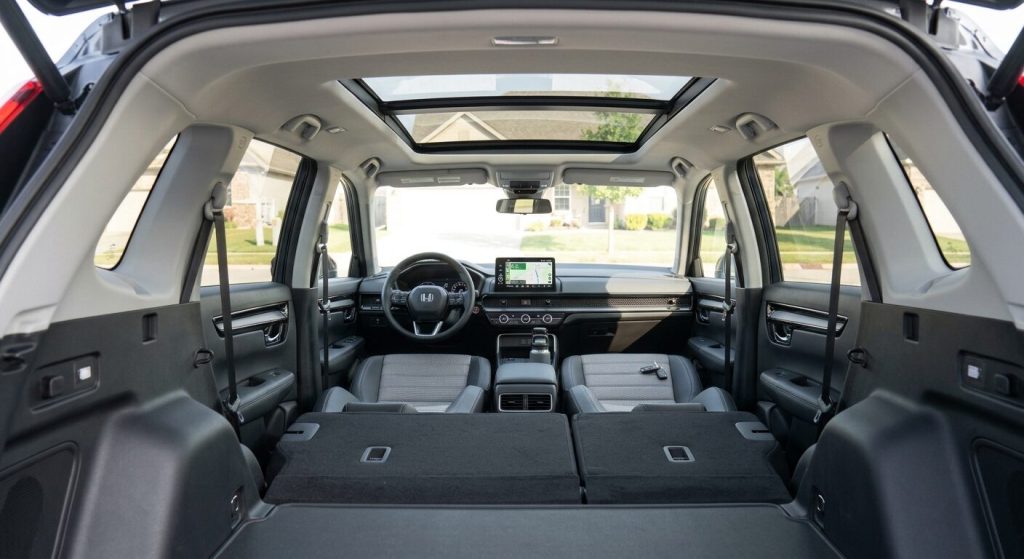
Honda didn’t just wake up one day and decide to stuff seven seats into a midsize SUV. This is the result of decades of refinement. Take a look at the journey:
- 1970s (Civic) : Simple, compact cabins focused on maximizing mechanical efficiency. Everything was manual, and space was a premium.
- 1990s (Accord) : The era of refinement. Plush fabrics, better ergonomics, and the beginning of “soft-touch” materials made the cabin a nicer place to be.
- 2000s (CR-V/Pilot) : The SUV boom. This is where versatility took over. The rear seats folded flat, and storage bins appeared everywhere. The first-gen CR-V even had a picnic table!
- Present Day (Prologue EV) : Minimalist digital displays, Honda Sensing® safety suites, and tech-focused interfaces that prioritize connectivity and air quality.
The Main Event: The 7-Seat Configuration
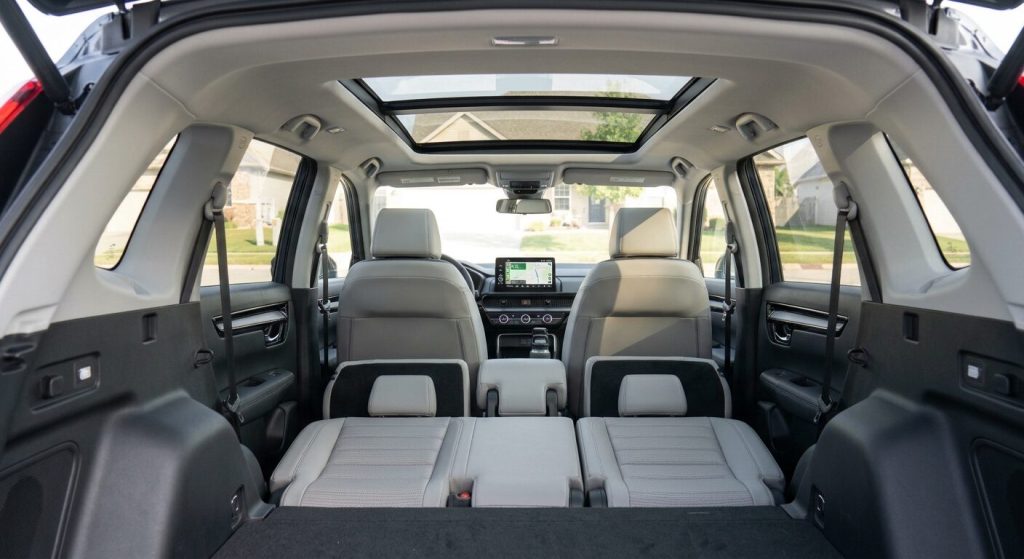
Let’s get to the heart of the matter. You’re probably wondering, “Can my teenager actually sit back there?”
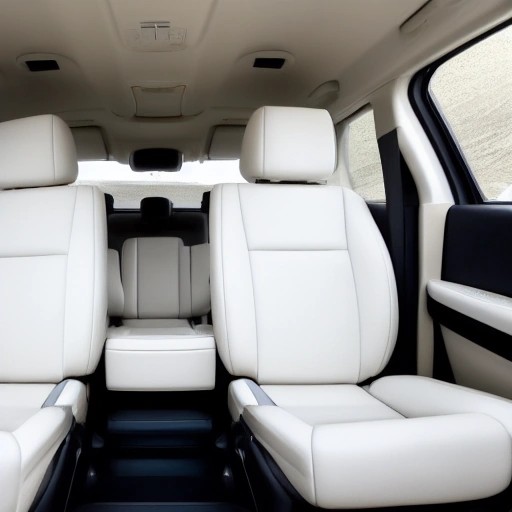
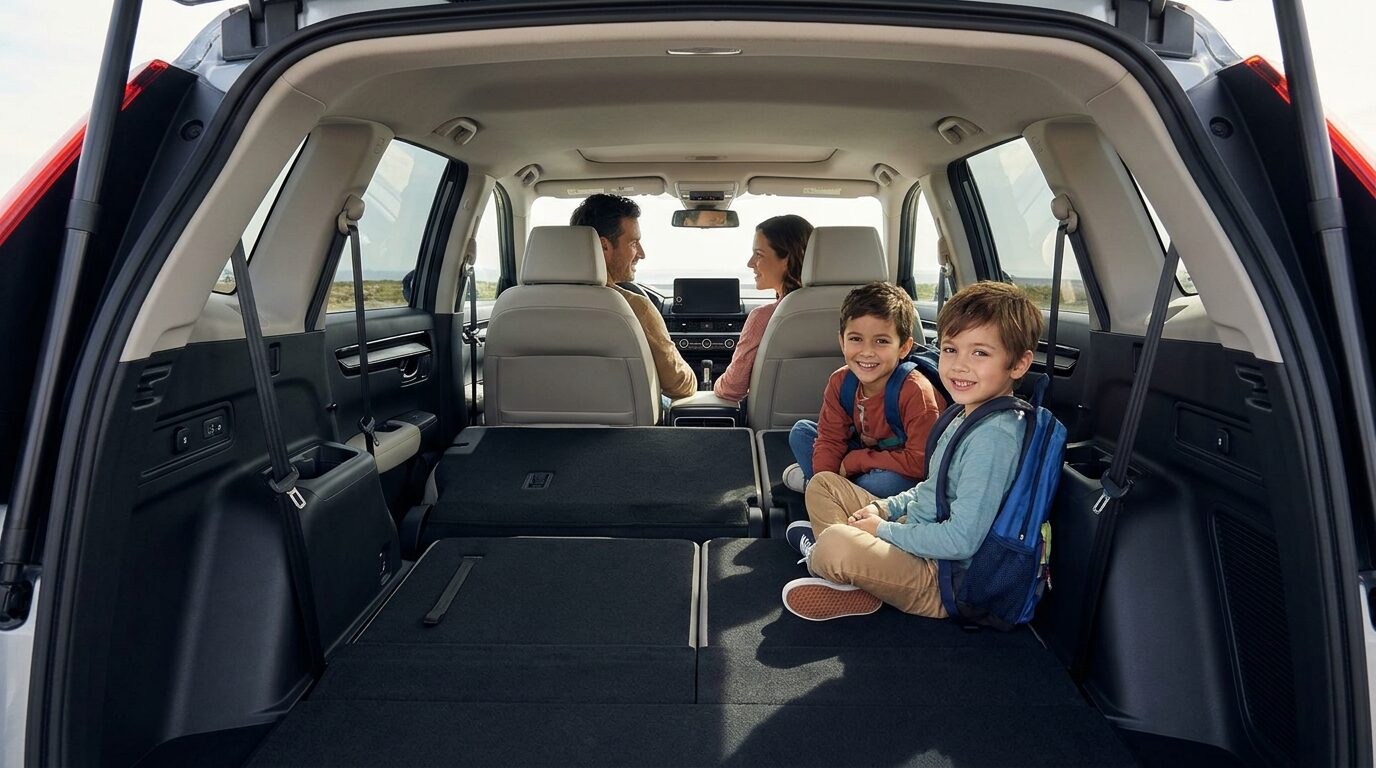
Accessing the third row is surprisingly easy. There’s a one-touch lever on the second-row seats that slides them forward, creating a decent gap to climb through . Once you’re back there, the truth sets in. With 150mm of slide adjustment in the second row, you can play a game of give-and-take between middle-row knee room and third-row legroom .
For a 5’8″ adult, the third row is manageable for a 30-minute trip to dinner. For anyone taller, it’s a yoga position they didn’t ask for. The seat cushion is low to the floor—often called a “knees-up” position—which isn’t great for long legs . However, Honda thoughtfully included roof-mounted vents for the third row (part of the Tri-Zone Climate Control system) so the back passengers aren’t gasping for air, and the seats themselves recline slightly, which helps with comfort .
Expert Insight: “A Honda interior isn’t just a place to sit; it’s a practical workspace, a family hub, and a command center. The thoughtful layout isn’t just about comfort; it’s about making every drive—from school drop-offs to cross-country trips—feel effortless.”
For families, the real-world impact is huge. Imagine driving to the beach with your two kids, plus a neighbor’s child. Suddenly, you don’t have to choose who gets left behind. Or picture a holiday dinner where you need to bring the grandparents. The CR-V 7 seater transforms from a daily commuter into a social vehicle.
However, if you fold that third row down, you’re back to a class-leading cargo area. The “dive-down” 60/40 seats fold almost completely flat, and the two-stage adjustable cargo floor lets you create a deep well for tall items or a flush surface for sliding in furniture . You can fit a mountain bike back there with the front wheel removed.
Honda CR-V Accessories Comparison
To truly make the CR-V your own, especially if you’re hauling kids, pets, or gear, here’s a look at some essential upgrades based on real data from the Honda official accessories shop and trusted aftermarket suppliers.
| Product Type | Best For | Installation Difficulty | Key Material | Price Range |
|---|---|---|---|---|
| All-Weather Floor Mats | Muddy boots, wet gear, kids | Easy (Snap-in) | High-density Rubber | $150 – $250 |
| Cargo Tray | Protecting trunk carpet from pets/ groceries | Easy (Drop-in) | Heavy-duty Plastic | $100 – $180 |
| Roof Rails | Extra cargo capacity (kayaks, roof box) | Moderate (Mounts required) | Polished Aluminum | $400 – $700 |
| Door Edge Guards | Preventing dings in tight parking | Easy (Adhesive) | Clear Vinyl/Paint | $50 – $120 |
| Wireless Phone Charger | Keeping devices powered without cables | Easy (Install in tray) | Silicone/Electronics | $200 – $350 |
| Rear Seat Protector | Protecting seats from car seats and dogs | Easy (Hooks/Straps) | Heavy-duty Fabric | $100 – $200 |
Note: Prices are estimates based on aftermarket brands like WeatherTech and Honda OEM accessories. Actual costs may vary by dealer.
Driving Impressions: How Does It Handle the Load?
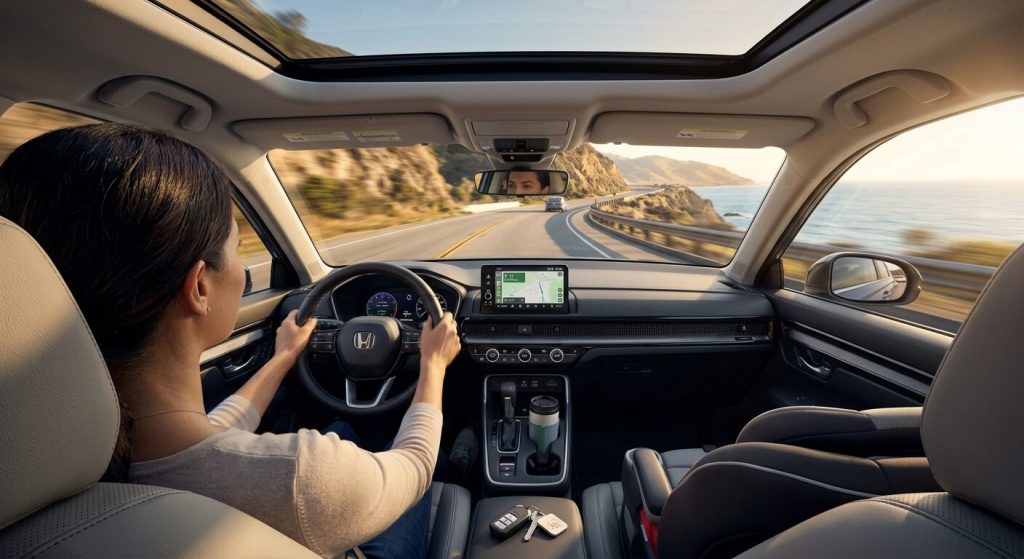
You might think a 1.5-liter four-cylinder engine would struggle to haul seven people. You’d be partially right, but not entirely. The 1.5L VTEC TURBO engine produces 190 hp and 179 lb-ft of torque, and crucially, peak torque kicks in at a low 1,700 rpm . This means around town, the CR-V feels sprightly. It pulls away from stoplights with confidence and cruises comfortably at highway speeds.
The magic is in the CVT transmission. Honda’s CVTs are among the best in the business; they don’t have that dreaded “rubber band” feeling. They simulate shifts and keep the engine in the sweet spot. But if you load up the car with seven people and a full trunk of luggage, you will notice the weight. The engine gets buzzy, and you’ll need to plan highway merges carefully .
Handling is where the CR-V shines. The steering is quick and direct, giving the driver confidence. It feels much smaller and nimbler than its dimensions suggest, making parking and navigating tight garages surprisingly easy . The ride quality is excellent, too. The independent suspension soaks up potholes and rough pavement without transmitting harshness to the cabin.
The only real dynamic downside? Noise. At highway speeds, tire roar and wind noise are noticeable. It’s not unbearable, but if you’re used to the hushed cabins of luxury cars, you’ll notice the difference. Interestingly, Honda relies on active noise cancellation in some trims to help mitigate this, but physics (and thinner sheet metal) often win the battle .
Frequently Asked Questions
What are Honda Magic Seats and how do they work?
While the CR-V uses a “dive-down” 60/40 system rather than the “Magic Seat” found in the HR-V and Fit (which fold up and down), the concept is similar—maximizing utility. In the CR-V, the second-row seats slide and recline, and fold nearly flat to create a massive loading floor for bulky items.
How does Honda Sensing® help keep drivers safe?
Honda Sensing® is a suite of safety and driver-assistive technologies. It includes features like Collision Mitigation Braking, Road Departure Mitigation, Adaptive Cruise Control, and Lane Keeping Assist, acting as an extra set of eyes to help you avoid accidents on the highway or in city traffic .
What are the best all-weather floor mats for a Honda CR-V?
For maximum coverage, many owners prefer custom-fit liners from WeatherTech or the official Honda All-Weather Floor Mats. They have raised edges to contain spills, mud, and snow, protecting the carpet beneath from the messiest of passengers.
Can I watch streaming video in my Honda while parked?
If your CR-V is equipped with the HondaLink® compatible infotainment system, some third-party apps may be available, but typically video playback is disabled while driving for safety. For passengers in the back, the best solution is using tablets or the CabinWatch® and CabinTalk® features available in models like the Odyssey to keep everyone entertained and communicated with.
How do I keep the Honda infotainment screen clean without scratching it?
Use a soft, dry microfiber cloth (like the one used for eyeglasses). For stubborn smudges, lightly dampen the cloth with a screen-safe cleaner or a mix of distilled water and a tiny drop of dish soap. Avoid paper towels or harsh chemicals like window cleaner, as they can damage the anti-glare coating.
What makes the Ridgeline In-Bed Trunk® unique?
While not on the CR-V, it’s a legendary Honda feature. The Ridgeline In-Bed Trunk® is a lockable, weather-sealed, and drainable storage bin built into the truck bed. It’s large enough to hold ice and drinks for a tailgate, or to securely store tools and groceries out of sight.
Is the Civic hatchback large enough for weekend luggage?
Absolutely. The Civic Hatchback is a TARDIS-like vehicle. With the rear seats up, it offers class-leading cargo space. Fold the rear seats down, and you have enough room for bikes, furniture, or luggage for a family of four going on a week-long road trip.
References
- Honda Ireland Official Site: New CR-V Details
- 7NEWS: 2026 Honda CR-V Review
- 易车: 本田CR-V 7座版实测体验
- CarsGuide: Honda CR-V 2021 Review
What’s your favorite hidden storage feature in your Honda? Have you ever tried to squeeze a whole family into a CR-V for a road trip? Drop your thoughts in the comments below